


El día de conducción ha terminado.
La casa rodante está estacionada, el motor apagado, los deslizadores abiertos y las sillas afuera. La energía eléctrica está conectada. Es posible que los amigos del sitio vecino se detengan más tarde. Alguien pasea al perro junto a los escalones mientras otro campista lleva la cena a la mesa de picnic.
El riesgo en la carretera ha cambiado, pero las preguntas sobre la responsabilidad no han desaparecido.
Un visitante puede tropezar cerca de la entrada de la casa rodante. Un cable puede cruzar un camino. El equipo exterior puede desplazarse hacia un espacio compartido. Una mascota puede interactuar con otro campista. Una fuga u otro incidente puede dañar la propiedad alrededor del sitio.
Aquí es donde la cobertura de responsabilidad civil de vacaciones puede volverse relevante.
La responsabilidad civil de vacaciones generalmente está diseñada para ciertas situaciones de responsabilidad mientras una casa rodante está estacionada y se utiliza con fines recreativos o de residencia temporal. El detonante exacto, las personas cubiertas, las ubicaciones, los límites y las exclusiones dependen de la aseguradora y de la póliza que haya adquirido.
También ayuda comprender lo que la cobertura pretende hacer y lo que todavía pertenece a su propia lista de verificación del campamento.
El seguro responde de acuerdo con la póliza después de un evento cubierto. Los buenos hábitos en el campamento ocurren antes de que algo salga mal.
Navegación rápida
- ¿Qué es la Responsabilidad Civil Vacacional?
- Guía rápida de cobertura
- Responsabilidad al conducir vs. Responsabilidad Vacacional
- Otras coberturas de vehículos recreativos
- Uso a tiempo completo de vehículos recreativos
- Lo que los campistas aún deben revisar
- Recorrido de responsabilidad en el campamento
- Vista exterior local
- Opciones de vista trasera
- Qué hacer después de un incidente
- Preguntas para su agente de seguros de vehículos recreativos
- Seguro + Listas de verificación para campamentos
- Preguntas frecuentes
Nota sobre el seguro: Este artículo proporciona información educativa general y no determina si un incidente particular está cubierto. Los productos de seguros, las definiciones, los límites y las exclusiones varían según la aseguradora, la póliza, el estado y el uso del vehículo recreativo. Lea sus declaraciones, formularios de póliza y endosos, y pregunte a su representante de seguros autorizado sobre su cobertura específica.
¿Qué es el seguro de vehículos recreativos de responsabilidad civil de vacaciones?
La responsabilidad civil por vacaciones es típicamente una forma opcional de cobertura de responsabilidad civil asociada con el uso recreativo de vehículos recreativos mientras el vehículo o remolque está estacionado.
Un ejemplo común involucra a un huésped u otra persona lesionada dentro o alrededor del vehículo recreativo durante un viaje de campamento.
Dependiendo de la aseguradora y la redacción de la póliza, la responsabilidad civil por uso vacacional cubierto también puede abordar ciertas situaciones de daños a la propiedad por las cuales el asegurado es legalmente responsable.
La palabra importante es dependiendo.
Las compañías de seguros pueden definir la cobertura de manera diferente. El mismo nombre de cobertura puede venir con diferentes:
- detonantes de cobertura
- límites de responsabilidad
- ubicaciones cubiertas
- definiciones de uso recreativo
- definiciones de una persona asegurada
- disposiciones de daños a la propiedad
- exclusiones
- disposiciones específicas del estado
Eso hace que la redacción de la póliza sea más importante que el nombre corto de la cobertura en una pantalla de cotización.
Un escenario típico de RV estacionado
Imagina que la autocaravana está estacionada en un camping y se usa para una estancia de fin de semana.
Un visitante se acerca a la puerta de entrada y se lesiona cerca del camping.
Ese es el tipo de situación de uso recreativo estacionado en la que la cobertura de responsabilidad civil por vacaciones puede ser relevante, sujeta a los hechos y los términos de la póliza.
Otro incidente podría implicar daños a la propiedad del campamento o de otra persona. Si la responsabilidad por vacaciones se aplica a ese tipo de daño a la propiedad depende de la póliza real.
Qué recordar: La responsabilidad por vacaciones generalmente se asocia con el uso recreativo de vehículos recreativos estacionados. La póliza determina exactamente cuándo se aplica y qué cubre.
Respuesta rápida: ¿Qué aborda generalmente la responsabilidad civil de vacaciones?
La forma más sencilla de entender el seguro de vehículos recreativos es separar las situaciones en lugar de tratar la póliza como un único gran contenedor.
| Situación | Cobertura a revisar |
|---|---|
| Alguien resulta herido dentro o alrededor de un vehículo recreativo estacionado mientras usted está acampando. | La responsabilidad civil de vacaciones puede ser relevante, sujeta a la póliza. |
| Usted es responsable de los daños a la propiedad de otra persona en el campamento. | Revise la redacción de la responsabilidad civil de vacaciones u otra responsabilidad aplicable. |
| Usted causa un accidente mientras conduce una autocaravana. | Cobertura de responsabilidad civil en carretera para autocaravanas. |
| Su propio vehículo recreativo se daña en una colisión. | Cobertura de colisión u otra cobertura de daños físicos aplicable. |
| Su vehículo recreativo se daña por robo, clima, vandalismo u otro evento cubierto no relacionado con una colisión. | Cobertura integral u otra cobertura de daños físicos aplicable. |
| Los efectos personales dentro del vehículo recreativo se dañan o son robados. | Cobertura de efectos personales / propiedad personal, si se adquirió y es aplicable. |
| El vehículo recreativo se avería y necesita remolque o asistencia en carretera. | Asistencia en carretera u otra cobertura opcional relacionada. |
| El vehículo recreativo se utiliza como residencia principal o permanente. | Pregunte sobre la cobertura para residentes a tiempo completo o de residencia permanente. |
| Un remolque de viaje se ve involucrado en un incidente mientras es remolcado. | Revise la responsabilidad civil en carretera del vehículo remolcador y la póliza del remolque por separado. |
Esta tabla es un punto de partida para preguntas, no una determinación de cobertura.
Su página de declaraciones muestra las coberturas y límites que seleccionó. Los formularios de póliza y los endosos explican cómo funcionan realmente esas coberturas.
La responsabilidad vacacional y la responsabilidad al conducir cubren diferentes partes del viaje
Un vehículo recreativo cambia de función a lo largo de un viaje.
Por la mañana, una autocaravana puede estar conduciendo por la autopista.
Por la tarde, puede estar maniobrando por un campamento.
Por la noche, puede estar estacionada, nivelada, conectada a los servicios públicos y funcionando como un espacio de vivienda temporal.
Diferentes coberturas de responsabilidad pueden aplicarse a esas diferentes etapas.
Responsabilidad de autocaravanas en la carretera
Cuando se conduce una autocaravana, la cobertura de responsabilidad civil en carretera generalmente aborda lesiones corporales o daños a la propiedad cubiertos de los que el conductor es responsable, hasta los límites de la póliza aplicables.
Esta es la cobertura de responsabilidad asociada con la operación del vehículo de motor.
La responsabilidad civil por vacaciones aborda un caso de uso diferente: el vehículo recreativo estacionado durante el uso recreativo cubierto.
Los remolques de viaje crean otra capa
Un remolque de viaje es arrastrado por otro vehículo de motor.
La responsabilidad civil en carretera durante el remolque se asocia comúnmente con la cobertura de responsabilidad civil del vehículo remolcador, mientras que la póliza separada del remolque puede proporcionar daños físicos y otras coberturas opcionales.
La responsabilidad por vacaciones puede estar disponible para ciertas situaciones de campamento estacionado.
Los detalles pueden variar, por lo que los propietarios de remolques de viaje deben revisar la póliza del vehículo remolcador y la póliza del remolque juntas en lugar de asumir que una póliza responde a todas las preguntas.

Pregunte sobre el punto de transición
Una pregunta útil para un representante de seguros es:
"¿Cuándo deja de ser mi responsabilidad en carretera la cobertura relevante y cuándo mi responsabilidad por vacaciones estacionado se vuelve relevante?"
La respuesta puede depender de cómo la póliza defina el uso, la ubicación y las circunstancias del incidente.
Lo que la responsabilidad civil de vacaciones no reemplaza automáticamente
La responsabilidad civil de vacaciones es una parte de un programa de seguro para vehículos recreativos.
No debe utilizarse como abreviatura de todo lo que puede ocurrir durante un viaje en vehículo recreativo.
Daños a su propio vehículo recreativo
Si el vehículo recreativo sufre daños, la cobertura relevante puede ser por colisión, completa u otra disposición de daños físicos, dependiendo de lo sucedido.
Los ejemplos pueden incluir:
- una colisión con otro vehículo
- una colisión con un objeto fijo
- robo
- vandalismo
- ciertos daños relacionados con el clima
- otras pérdidas cubiertas enumeradas en la póliza
La cobertura de daños físicos suele tener sus propios límites, deducibles y exclusiones.
Pertenencias personales
Las computadoras portátiles, cámaras, equipos para actividades al aire libre y otros artículos personales pueden requerir protección separada para efectos personales o propiedad personal.
Verifique:
- el monto de la cobertura
- límites especiales para ciertas propiedades
- deducible, si corresponde
- términos de costo de reemplazo o valor en efectivo real
- artículos excluidos
Asistencia en carretera
Una avería, un neumático pinchado, una batería descargada o la necesidad de un remolque se gestionan generalmente mediante la cobertura de asistencia en carretera u otro servicio aplicable.
Esa es una cuestión diferente a la responsabilidad por una lesión en un campamento estacionado.
Pagos médicos y otras coberturas opcionales
Las pólizas de vehículos recreativos también pueden ofrecer pagos médicos, gastos de emergencia, cobertura relacionada con mascotas y otras protecciones opcionales.
La disponibilidad y los detalles varían considerablemente.
Lea cada cobertura como su propia herramienta en lugar de asumir que un endoso de responsabilidad cubre todas las brechas.
El uso vacacional y la vida en autocaravana a tiempo completo requieren preguntas de seguro separadas
Un vehículo recreativo que pasa algunos fines de semana al año en campamentos tiene un patrón de uso diferente al de un vehículo recreativo que sirve como vivienda principal de alguien.
Si el vehículo recreativo es su residencia principal o vive en él durante períodos prolongados, informe a la aseguradora exactamente cómo lo usa.
Algunas compañías de seguros ofrecen responsabilidad civil para residentes a tiempo completo o una póliza de vehículo recreativo a tiempo completo más amplia diseñada para el uso de residencia permanente.
Las definiciones y las reglas de elegibilidad son específicas de cada aseguradora.
Preguntas para los que viven en casas rodantes a largo plazo
Pregunte:
- ¿Mi póliza actual define el uso de mi vehículo recreativo como recreativo?
- ¿En qué momento mi aseguradora considera el vehículo recreativo como residencia principal?
- ¿Necesito un seguro de responsabilidad civil para residentes a tiempo completo?
- ¿Pueden coexistir la responsabilidad civil por vacaciones y la responsabilidad civil para residentes a tiempo completo en esta póliza?
- ¿Cómo afecta la ocupación a largo plazo del campamento a la cobertura?
- ¿Hay restricciones de ubicación o residencia que deba conocer?
Proporcione a la aseguradora una descripción precisa de cómo se utiliza realmente el vehículo recreativo.
Esto es más útil que elegir una cobertura basándose únicamente en el nombre.
Lo que los campistas aún deben revisar después de estacionar la casa rodante
El seguro forma parte del proceso de planificación.
La siguiente capa es el propio campamento.
Una vez estacionada la casa rodante, varias cosas comunes pueden crear problemas evitables.
Escalones y área de entrada
Compruebe si:
- los escalones están completamente desplegados donde sea necesario
- el suelo debajo de ellos es estable
- el área de entrada es visible por la noche
- zapatos, bolsos o equipos están bloqueando el camino
- la lluvia o el barro han hecho que la superficie sea resbaladiza
Cables, mangueras y conexiones de servicios públicos
Los cables de corriente, las mangueras de agua y el equipo de alcantarillado pueden extenderse por áreas donde la gente camina naturalmente.
Colóquelos teniendo en cuenta la disposición del campamento.
Observe el camino desde:
- la puerta de la autocaravana a la mesa de picnic
- la autocaravana al vehículo de remolque
- el camping a la carretera del camping
- su sitio a las áreas compartidas vecinas
Toldo y equipo exterior
Verifique el toldo, las sillas, las mesas, las parrillas y el equipo exterior después de la instalación.
El viento, el clima y la actividad normal del campamento pueden cambiar la forma en que el espacio funciona durante la estancia.
Mascotas
Mantenga a las mascotas bajo control de acuerdo con las normas del campamento y su rutina normal de manejo.
Piense en:
- ubicación de la correa
- visitantes que se acercan a la autocaravana
- mascotas vecinas
- niños caminando cerca del sitio
- alimentos o vida silvestre que puedan atraer la atención
Equipo montado en la parte trasera
Los portabicicletas, los portaequipajes, los enganches y las ruedas de repuesto pueden sobresalir del borde trasero original de la autocaravana.
Asegúrese de que permanezcan seguros y no creen un obstáculo inesperado a lo largo de un camino compartido.
Qué recordar: La pregunta del seguro es "¿qué cubre la póliza?". La pregunta del campamento es "¿qué puedo observar y corregir antes de que alguien se lastime o la propiedad se dañe?"
Realice un recorrido de responsabilidad civil en el campamento después de estacionar
Una breve caminata alrededor del vehículo recreativo puede convertirse en parte de la rutina de cada llegada.
1. Asegure el vehículo recreativo
Siga los procedimientos del fabricante para:
- freno de estacionamiento
- calzos de rueda
- nivelación
- estabilización
- enganche o tren de aterrizaje
2. Verifique la entrada
Mira:
- escalones
- barandillas
- iluminación de entrada
- condiciones del suelo
- objetos cerca de la puerta
3. Siga cada cable y manguera
Camine por la ruta de:
- cable de alimentación de tierra
- manguera de agua dulce
- manguera de alcantarillado
- cables de extensión donde esté permitido
Verifique que las conexiones estén seguras y que las rutas tengan sentido para el campamento.

4. Revisa la zona exterior
Mira:
- toldo
- sillas
- mesas
- parrilla o área de cocina
- fogón
- bicicletas
- equipo de carga
5. Observe el campamento desde la perspectiva de un visitante
Es posible que alguien que visite su casa rodante no sepa dónde comienza el escalón, dónde pasa el cable o dónde está descansando su perro.
Camine desde la carretera del campamento hacia la puerta de la casa rodante como si llegara por primera vez.
Esa perspectiva a menudo revela pequeñas cosas que son fáciles de ignorar una vez que está familiarizado con su propia configuración.
Utilice Solar4 Wifi como una vista de conocimiento local
A veces hay un área exterior que le gustaría echar un vistazo mientras está dentro del vehículo recreativo.
La Solar4 Wifi puede enviar una imagen en vivo directamente a un teléfono o tableta compatible a través de su conexión WiFi local.
Para un vehículo recreativo estacionado, la cámara se puede colocar hacia un área cercana seleccionada, como:
- la parte trasera del campamento
- un área lateral cerca del vehículo recreativo
- un área de bicicletas o carga
- un camino inmediatamente detrás del vehículo
El teléfono o la tableta deben permanecer dentro del alcance de la conexión WiFi local de la cámara.
La vista en vivo funciona como una herramienta de conocimiento para un área cercana seleccionada.
No reemplaza una caminata física, las cerraduras normales, la supervisión de mascotas, la iluminación del campamento o las verificaciones directas de cables y escalones.
Tampoco debe tratarse como una promesa de seguridad, prevención de pérdidas o cobertura de seguro.
Mantenga la pregunta del seguro separada
La presencia de una cámara no determina si se cubre una reclamación de seguro.
Las decisiones de cobertura dependen de la póliza, los hechos del evento y el proceso de reclamación de la aseguradora.
Si alguna vez tiene preguntas sobre la información que su aseguradora desea después de un incidente, pregúntele directamente a la aseguradora.
Recordatorio de vista local: Solar4 Wifi proporciona una vista de cámara a dispositivo cercana. Es una forma adicional de ver un área seleccionada, mientras que las revisiones físicas del campamento siguen siendo parte de la rutina.
Una pantalla de visión trasera dedicada puede añadir otra perspectiva al campamento
Una cámara trasera también puede ser útil durante la propia llegada.
El Solar5B ofrece una cámara trasera magnética con un monitor dedicado para una configuración sencilla de visión trasera.
El Kit de doble cámara Solar5B añade una segunda cámara móvil.
Dependiendo del vehículo y la ubicación de montaje, una cámara puede mostrar el área trasera principal mientras que la segunda cubre una perspectiva seleccionada, como:
- la esquina trasera del lado del pasajero
- un portabicicletas
- el enganche
- el borde del campamento
Para una RV más grande que regularmente necesita varias vistas al posicionarse, el CampSync D1 utiliza tres cámaras y cuatro lentes: una cámara trasera de doble lente y dos cámaras laterales.
Estos sistemas proporcionan contexto visual alrededor de áreas seleccionadas.
No pueden confirmar que todas las condiciones del camping son seguras y no reemplazan la necesidad de salir a inspeccionar el área directamente.
Si ocurre algo en el campamento, priorice a las personas
Un incidente puede ser estresante, especialmente cuando involucra a huéspedes, otro campamento o propiedad del campamento.
Mantenga los primeros pasos sencillos.
Aborde la seguridad inmediata
Dependiendo de la situación:
- verifique si alguien necesita asistencia médica
- llame a los servicios de emergencia cuando sea apropiado
- aleje a las personas de un peligro inmediato si es seguro hacerlo
- notifique al personal del campamento cuando sea apropiado
Registre los hechos básicos
Cuando la situación inmediata esté bajo control, anote:
- fecha
- hora
- nombre del campamento
- número o ubicación del sitio de campamento
- qué sucedió
- personas involucradas
- información de contacto
- información de testigos
- fotos del área cuando sea apropiado
- información de contacto del personal del campamento
Mantenga también su información de seguro accesible.
Contacte a la aseguradora
Reporte el incidente de acuerdo con las instrucciones de su póliza o documentos de seguro.
Describa los hechos con precisión y deje que la aseguradora explique los siguientes pasos en su proceso de reclamos.
No asuma solo por el nombre de la cobertura que una pérdida particular estará o no cubierta.
La aseguradora evaluará los hechos bajo los términos reales de la póliza.
Preguntas para hacer a su agente de seguros de RV antes del viaje
Una breve conversación antes de que comience la temporada puede responder preguntas que son mucho más difíciles de resolver después de un incidente.
Considere preguntar:
- ¿Actualmente tengo cobertura de responsabilidad por vacaciones?
- ¿Cuándo exactamente se aplica esta cobertura?
- ¿Cómo define la póliza el uso vacacional o recreativo?
- ¿La RV necesita estar en un campamento o parque de RV designado?
- ¿Cómo se aplica la cobertura durante el acampada libre o estancias en propiedad privada?
- ¿Qué situaciones de lesiones corporales a terceros pueden estar cubiertas?
- ¿Qué situaciones de daños a la propiedad de terceros pueden estar cubiertas?
- ¿Qué límite de responsabilidad seleccioné?
- ¿Se aplica alguna franquicia u otra disposición de costos compartidos?
- ¿Quién califica como asegurado bajo la cobertura?
- ¿Qué exclusiones debo conocer?
- ¿Mi cantidad de uso de la RV todavía califica como recreativo?
- ¿Debería tener cobertura de tiempo completo en su lugar?
- ¿El uso de instalaciones de almacenamiento recibe alguna protección de responsabilidad por vacaciones?
- ¿Cómo debo reportar un incidente de responsabilidad en el campamento?
Anote las respuestas o guarde las páginas relevantes de la póliza en su teléfono.
Eso le proporciona algo más fiable que intentar recordar una conversación meses después.

Detalles de la póliza que vale la pena leer antes de que la RV salga de casa
Los documentos de seguro pueden ser densos, así que concéntrese en algunas secciones que respondan preguntas prácticas sobre el campamento.
Límite de cobertura
Confirme el límite de responsabilidad por vacaciones seleccionado que se muestra en los documentos de la póliza.
No asuma que el número es el mismo entre aseguradoras o pólizas.
Definiciones
Busque definiciones que involucren:
- asegurado
- RV
- residencia
- residencia temporal
- uso vacacional
- uso recreativo
- ubicación cubierta
Exclusiones
Pida a la aseguradora que le explique las exclusiones que puedan ser relevantes para su uso.
Ejemplos sobre los que vale la pena preguntar incluyen:
- uso comercial
- uso de alquiler
- residencia a tiempo completo
- actos intencionales
- incidentes relacionados con animales
- cierta propiedad perteneciente al asegurado
- ubicaciones o usos específicos
Reglas de ubicación
Algunos propietarios de RVs se alojan casi exclusivamente en campamentos comerciales.
Otros rotan entre:
- campamentos
- parques de RV
- sitios de campamento en terrenos públicos
- propiedad privada
- entradas de vehículos
- instalaciones de almacenamiento
Pregunte cómo su póliza trata los lugares donde realmente se aloja.
Listas de verificación de responsabilidad por vacaciones + campamento
Lista de verificación del seguro
| Verificar | Pregunta |
|---|---|
| Cobertura | ¿Tengo responsabilidad por vacaciones? |
| Activador | ¿Cuándo es relevante la cobertura? |
| Ubicación | ¿Qué campamentos, parques, lugares de almacenamiento o propiedades privadas califican? |
| Lesiones corporales | ¿Qué situaciones de lesiones a terceros están incluidas? |
| Daños a la propiedad | ¿Qué situaciones de daños a la propiedad de terceros están incluidas? |
| Límite | ¿Qué límite de responsabilidad compré? |
| Deducible | ¿Se aplica alguna franquicia o provisión similar? |
| Exclusiones | ¿Qué situaciones o usos están excluidos? |
| Uso a tiempo completo | ¿Mi uso actual de la RV requiere una póliza diferente? |
| Reclamos | ¿Cómo se debe reportar un incidente? |
Lista de verificación del campamento
| Área | Qué verificar |
|---|---|
| Estacionamiento | Freno de estacionamiento, calzos, nivelación y estabilización según el procedimiento de la RV |
| Escalones | Despliegue estable, aproximación despejada y área de entrada visible |
| Iluminación | Iluminación útil alrededor de la entrada y áreas exteriores de uso común |
| Eléctrico | Conexión segura a la toma de corriente y ruta de cable sensata |
| Agua / alcantarillado | Conexiones seguras y rutas de mangueras que minimicen conflictos con las áreas de tránsito |
| Toldo | Posición, espacio libre circundante y cambios en las condiciones climáticas |
| Cocina / fuego | Ubicación del equipo, reglas del campamento y materiales combustibles cercanos |
| Mascotas | Correa, supervisión y requisitos del campamento |
| Visitantes | Ruta de tránsito clara hacia la entrada de la RV |
| Equipo trasero | Bicicletas, enganche, portaequipajes y otros equipos sobresalientes |
| Vista de la cámara | Vista trasera o exterior seleccionada funcionando como se espera |
| Paseo final | Complete un recorrido exterior después de la instalación |
Opciones de AUTO-VOX para la conciencia del campamento y la visión trasera
| Producto | Necesidad de visualización | Función en el campamento |
|---|---|---|
| Solar4 Wifi | Vista local en teléfono / tableta | Área exterior seleccionada cercana dentro del rango de WiFi local |
| Solar5B | Vista trasera dedicada | Perspectiva trasera sencilla durante el estacionamiento o las verificaciones del campamento |
| Kit de doble cámara Solar5B | Dos perspectivas seleccionadas | Trasera principal + segundo ángulo móvil |
| CampSync D1 | Trasera más lejana/cercana + ambos lados | Opción multivista para necesidades de posicionamiento de RV más grandes |
Opciones de cámara para vistas traseras y exteriores del campamento


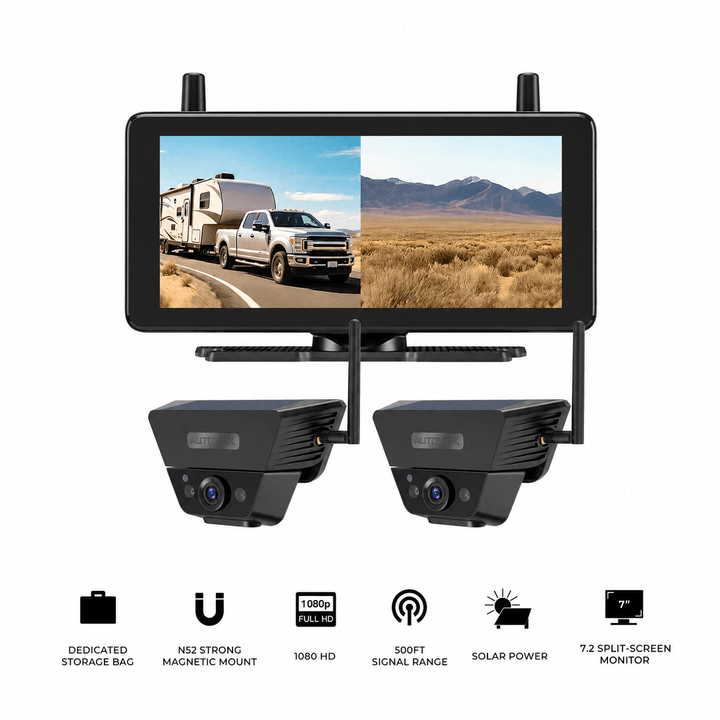

Los precios y las configuraciones pueden cambiar. Confirme la página actual del producto, el paquete seleccionado, la compatibilidad con la RV, el método de montaje y los requisitos de energía antes de la compra.
Malentendidos comunes sobre el seguro de RV de responsabilidad por vacaciones
Asumir que la responsabilidad en carretera cubre todas las situaciones del campamento
La responsabilidad por conducir y la responsabilidad por uso recreativo estacionado abordan circunstancias diferentes. Revise ambas partes del acuerdo de seguro.
Asumir que la responsabilidad por vacaciones paga los daños a su propia RV
El daño físico a su RV es generalmente una pregunta de cobertura separada. Revise la cobertura de colisión, completa y cualquier otra protección aplicable.
Asumir que las pertenencias personales están incluidas automáticamente
Los efectos personales pueden tener su propio límite de cobertura, deducible, método de valoración y exclusiones.
Asumir que todos los lugares donde estaciona califican
Los campamentos, la propiedad privada, los lugares de acampada libre y las instalaciones de almacenamiento pueden tratarse de manera diferente según la póliza.
Ignorar la diferencia entre uso recreativo y uso a tiempo completo
Informe a la aseguradora cuando la RV se convierta en una residencia principal o a largo plazo para que la póliza pueda revisarse para ese uso.
Pensar que el seguro hace que la lista de verificación del campamento sea menos importante
El estacionamiento, los calzos, los cables, los escalones, las mascotas, los visitantes y el equipo exterior aún merecen atención normal después de que la RV esté instalada.
Asumir que una cámara determina el resultado de una reclamación de seguro
Una cámara proporciona información visual. La cobertura del seguro y las decisiones de reclamación dependen de la póliza y las circunstancias del evento.
Preguntas frecuentes
¿Qué es el seguro de RV de responsabilidad por vacaciones?
La responsabilidad por vacaciones es generalmente una cobertura de responsabilidad opcional destinada a ciertas situaciones que involucran una RV estacionada durante un uso recreativo o vacacional cubierto. Un ejemplo común es una tercera persona lesionada en o alrededor de la RV. Las definiciones exactas, los límites, las ubicaciones cubiertas y las exclusiones varían según la póliza.
¿La responsabilidad por vacaciones cubre los daños a mi propia RV?
Los daños a su propia RV son generalmente una pregunta de daños físicos separada. Dependiendo de lo que sucedió y la cobertura adquirida, la colisión, la cobertura completa u otra provisión pueden ser relevantes. Consulte la póliza para su situación específica.
¿La responsabilidad por vacaciones cubre los daños a la propiedad de otra persona?
Algunas pólizas de RV pueden proporcionar protección de responsabilidad por daños a la propiedad de terceros cubiertos que surjan del uso recreativo estacionado. El alcance varía, así que verifique la redacción de daños a la propiedad y las exclusiones con su aseguradora en lugar de asumir que está incluido.
¿Es la responsabilidad por vacaciones lo mismo que el seguro de RV a tiempo completo?
Sirven para diferentes patrones de uso. La responsabilidad por vacaciones generalmente se asocia con el uso recreativo, mientras que la cobertura para residentes a tiempo completo está diseñada para RVs utilizadas como residencia principal o permanente. Pregunte a la aseguradora qué descripción coincide con la forma en que realmente usa su RV.
¿La responsabilidad por vacaciones se aplica mientras conduzco la RV?
La responsabilidad por vacaciones generalmente se discute en relación con el uso recreativo estacionado. La responsabilidad que surge al conducir una autocaravana se maneja a través de la cobertura de responsabilidad civil de vehículos de motor aplicable. Los propietarios de remolques de viaje también deben revisar la cobertura de responsabilidad del vehículo remolcador.
¿Puede una cámara de RV garantizar que una compañía de seguros aceptará una reclamación?
Ninguna cámara puede determinar si un incidente está cubierto o garantizar el resultado de una reclamación. La cobertura depende de los términos de la póliza y los hechos. Si ocurre un incidente, siga las instrucciones de informe de la aseguradora y proporcione la información que solicite la aseguradora.
Reflexiones finales: Revise la póliza y el campamento
La responsabilidad por vacaciones tiene más sentido cuando se ve como una parte del panorama general del seguro de RV.
Antes del viaje, comprenda la póliza.
Pregunte:
- ¿Tengo responsabilidad por vacaciones?
- ¿Cuándo se aplica?
- ¿Qué ubicaciones califican?
- ¿Qué situaciones de lesiones corporales y daños a la propiedad están incluidas?
- ¿Qué límite compré?
- ¿Qué exclusiones se aplican?
- ¿Mi uso actual de la RV aún califica como recreativo?
Después de llegar al campamento, cambie a la lista de verificación física.
Verifique:
- estacionamiento y calzos de rueda
- escalones e iluminación de entrada
- cables de corriente
- mangueras de agua y alcantarillado
- toldo y equipo exterior
- mascotas y caminos para visitantes
- bicicletas, portadores y equipo trasero
- el campamento completo una vez más
Si ocurre un incidente, priorice a las personas, documente los hechos básicos y siga el proceso de informe de la aseguradora.
Esas dos listas de verificación funcionan bien juntas porque responden a preguntas diferentes.
La póliza le dice qué protección adquirió.
La inspección del campamento le ayuda a detectar problemas mientras aún son fáciles de corregir.
Antes de su próximo viaje de campamento, revise las preguntas del seguro y la lista de verificación del campamento juntas. Sepa lo que dice la póliza antes de llegar, luego inspeccione el sitio después de estacionar.


